
HISTORY
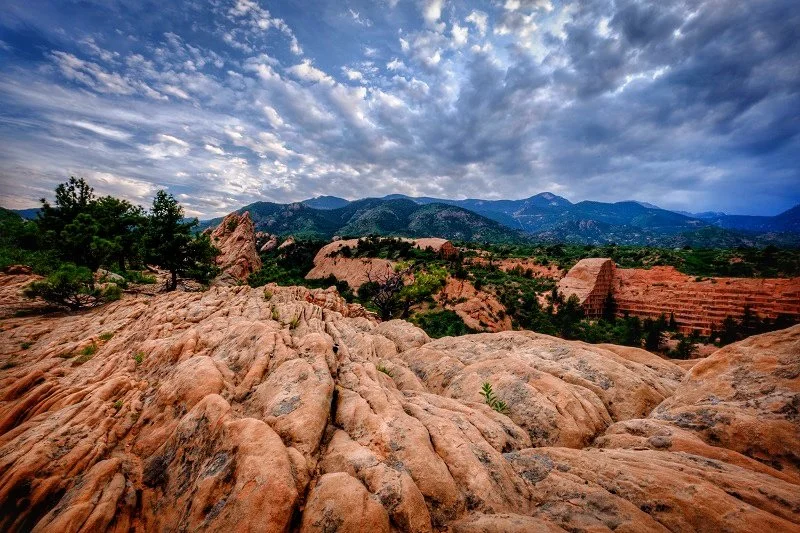
The history of Red Rock Canyon is a story of people making use of the area's resources, location, and dramatic landscape. Long before Colorado Springs was founded, Ute people used the high Dakota sandstone hogbacks as natural lookout points, offering expansive views of the surrounding plains. Later, gypsum mines and sandstone quarries supplied building materials for Colorado City and communities throughout the growing West. The arrival of the Colorado Midland Railroad made it possible to transport these resources and supported the development of mills that processed gold ore from nearby Cripple Creek.
Visitors can explore this rich heritage along the 3.72-mile History Theme Trail Loop, a self-guided journey through some of the park's most significant historic sites. Along the route, you'll discover locations connected to Native American history, quarrying operations, mining activity, rail transportation, and other chapters that helped shape both Red Rock Canyon and the Pikes Peak region. Historic sites on the trail are numbered to correspond with interpretive stories, allowing hikers to experience the landscape while learning about the people, industries, and events that left their mark on the canyon. Interpretive signs are located at the 31st Street Trailhead and near the Open Air Pavilion to help guide your exploration.
FIND OUT MORE
The Legend of Pikes Peak (poem)
How Did We Get the Name Colorado?
Bott & Langmeyer Building Stone
Red Rock Stone in Denver Buildings
Mining in and Around Red Rock Canyon
Standard and Colorado-Philadelphia Mills
World Trade Center…In Red Rock Canyon
Two Langmeyer Homesteads – With permission by the author
FURTHER READING
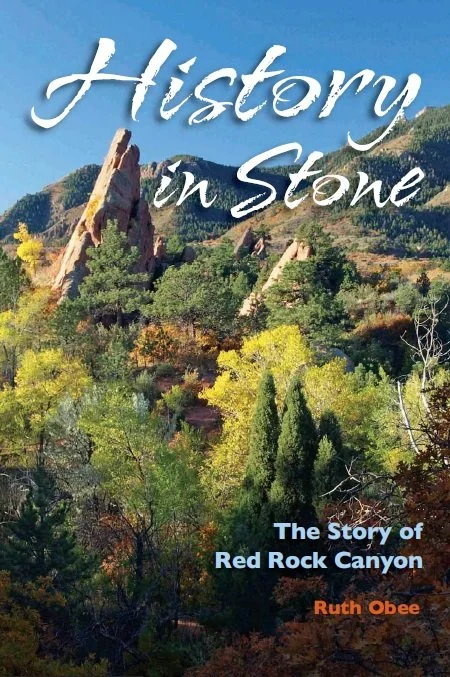
History in Stone By Ruth Obee
Ruth Obee’s new book History in Stone: The Story of Red Rock Canyon, is a 260-page narrative that begins, â la James Michener, with the area’s geological origins, dating back 1.75 billion years to some of the oldest rock on the planet. It tells the story of recently discovered dinosaur tracks, marine fossils, and archeological evidence of an early human presence on the open space. Red Rock Canyon’s rich and diverse wildlife ecology is fully detailed in first-time lists of flora and fauna – from iconic Colorado wildflowers to big hairy carnivores.
GEOLOGY
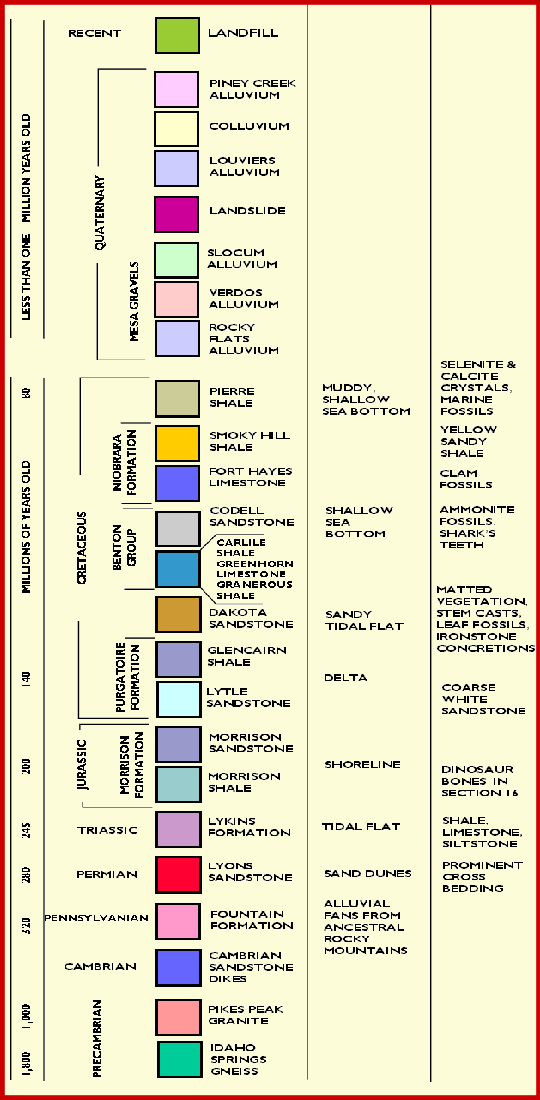
The geologic story of Red Rock Canyon began nearly 300 million years ago when sand and gravel washed down from the ancestral Rocky Mountains, forming vast alluvial deposits that eventually became the Fountain Formation. About 50 million years later, shifting desert dunes blanketed the area, creating the striking red Lyons Sandstone that gives Red Rock Canyon much of its distinctive character today.
Over the next 100 million years, the landscape changed dramatically as shorelines advanced and retreated across the region. At various times, the future canyon was a tidal flat, a delta, a sandy shoreline, and eventually the floor of a shallow inland sea. Layers of sand, mud, seashells, and even shark teeth accumulated over millions of years, forming the Morrison, Purgatoire, Dakota, Colorado Group, Fort Hays Limestone, Smoky Hill Shale, and Pierre Shale formations that can still be seen throughout the area.
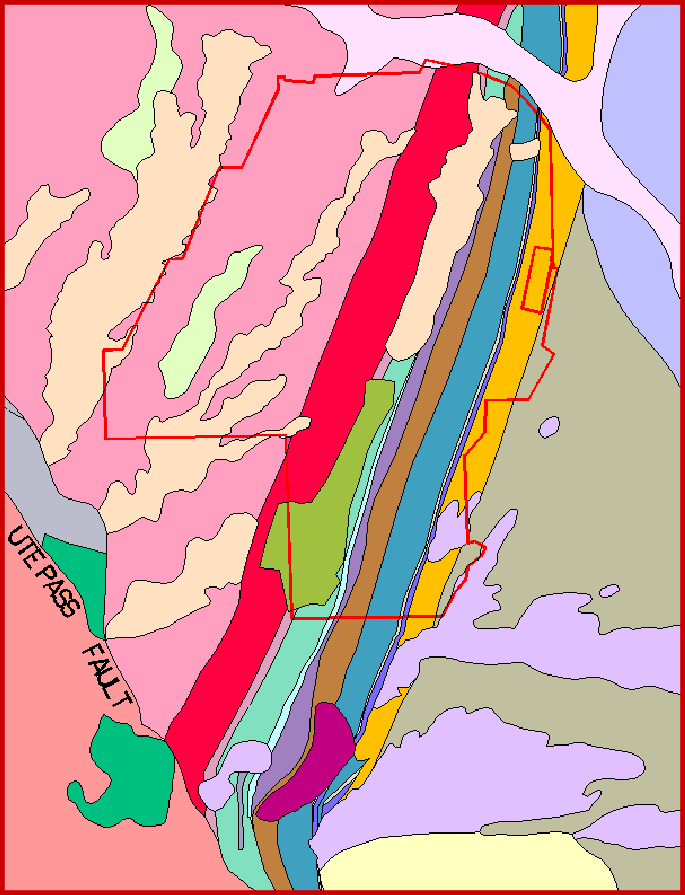
Then came a period of powerful mountain-building known as the Laramide Orogeny. Beginning about 70 million years ago, immense forces deep within the earth uplifted the Rocky Mountains and tilted the sedimentary rock layers of Red Rock Canyon into the dramatic formations visible today. Along the Ute Pass Fault, these younger sedimentary rocks meet much older rocks, including the 1.7-billion-year-old Idaho Springs Gneiss and the billion-year-old Pikes Peak Granite found in nearby Section 16. In some locations, ancient cracks in these igneous rocks were filled with sand during the Cambrian Period, creating unusual sandstone dikes that stand apart from the surrounding rock layers.
Over millions of years, erosion carved the uplifted rock layers into the parallel ridges, valleys, and canyons that define Red Rock Canyon today. Sand and gravel carried down from the mountains accumulated in lower areas, forming the mesas and rolling landscapes that complete this remarkable geologic story.
FURTHER READING
For those interested in learning more about the geology of Red Rock Canyon and its connection to local history, an excellent resource is Geologic Folio: Red Rock Canyon Open Space, Colorado Springs, Colorado by Ken Weissenburger, Sharon Milito, and Don Ellis. The book received the prestigious 2011 Caroline Bancroft Award from History Colorado and is available through the Old Colorado City Historical Society.
Additional research can be found in Sharon Milito's paper, A Survey of Fossils and Geology, Red Rock Canyon, Colorado Springs, CO, which provides further insight into the area's remarkable geologic and fossil record.
BIOLOGY
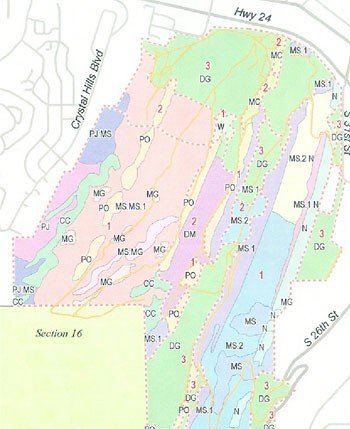
The biology of the Red Rock Canyon area is strongly influenced by the underlying geology and by the terrain which has been largely defined by the geology. The relation of the biology to geology is demonstrated strikingly by comparing the vegetation map to the geologic map. Different rock types, soil conditions, slopes, and elevations create a variety of habitats, each supporting its own unique mix of vegetation and wildlife.
The artificial lakes provide valuable riparian habitat where visitors may spot geese, herons, and other water-loving species. Cottonwood and aspen trees thrive along the canyon floor, while the cooler, shaded canyons support forests of Douglas fir and ponderosa pine. On the warmer, drier slopes, piñon pine and juniper create a landscape more typical of the American Southwest. Elsewhere, shrublands dominated by Gambel oak and mountain mahogany blend into grasslands dotted with yucca, prickly pear, and pincushion cactus.
Red Rock Canyon Open Space is home to an impressive variety of wildlife, including deer, coyotes, black bears, and mountain lions. More than 600 plant species have been identified within the park, ranging from colorful wildflowers and spiderworts to sage, yucca, and dogbane. Morning glories brighten rocky outcrops with their vibrant blooms, while horned lizards, rabbits, and ground squirrels are commonly seen along the trails. After spring and summer rains, visitors may even spot tiny toads emerging from temporary pools of water.
Together, these diverse ecosystems make Red Rock Canyon one of the most biologically rich and fascinating natural areas along Colorado Springs' urban-wildland boundary.